Facts & Information
The science behind fluorescent lamp disposal and mercury contamination.
Understanding fluorescent lamps and mercury
Light generation
An electric current passing through mercury vapor generates ultraviolet (UV) light. This UV light then excites the phosphorus coating on the inside of the tube, producing visible light.
What's inside a lamp
A typical lamp consists of a glass tube, metal end-caps, metal cathodes, mercury phosphor powder, vaporized mercury, and electric filaments within a vacuum tube. Even a small amount of mercury is enough to pose a hazard if released.
Why it's hazardous
Mercury vapor released from a broken lamp is toxic to the nervous system and kidneys and can contaminate soil and water if not handled and disposed of properly.
Why proper disposal matters
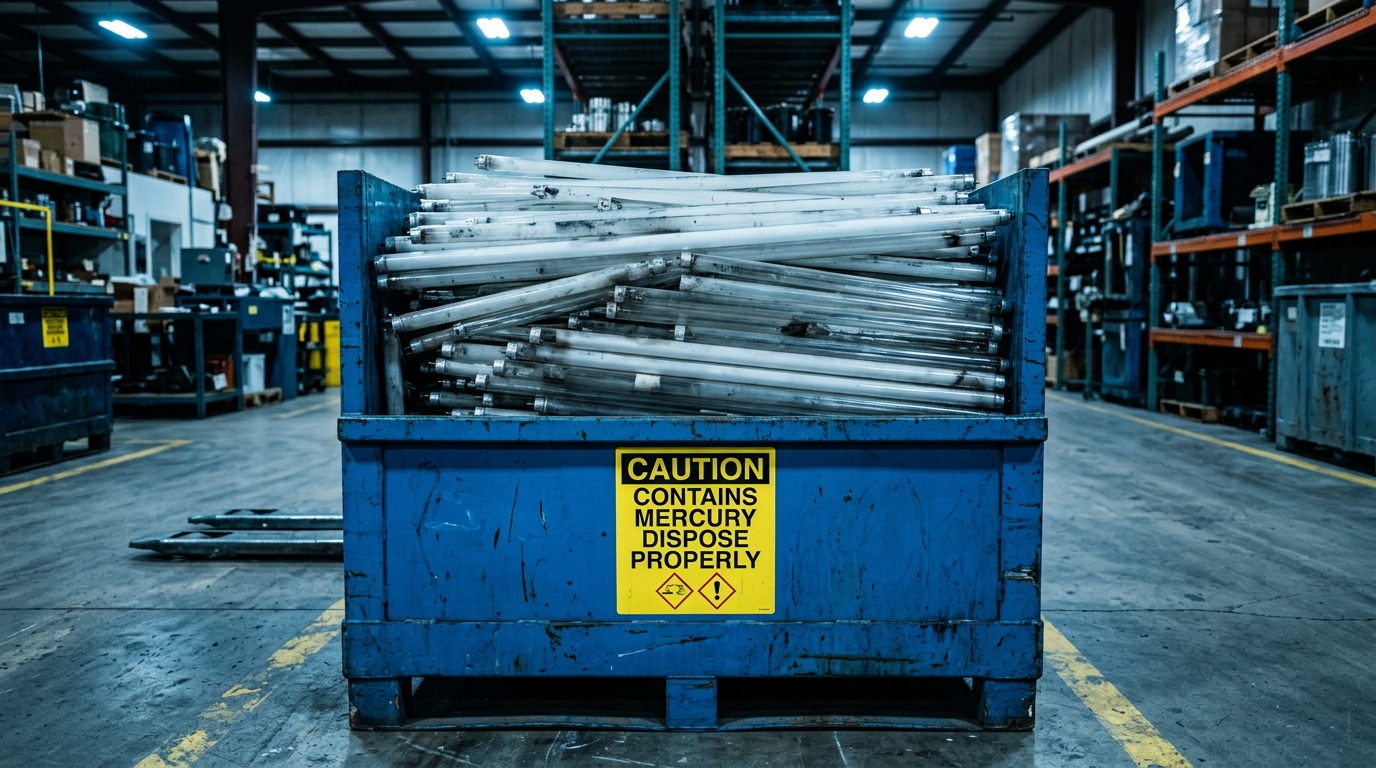
Contains Mercury
Not Allowed in Regular Trash
Classified as Universal Waste
Hazardous if Released as Vapor
Fluorescent and HID lamps are regulated as universal waste under federal and Illinois rules. Building owners, property managers, and tenants who generate spent lamps are responsible for arranging recycling rather than placing them in regular trash.
Ready to plan a lamp pickup?
Schedule a pickup or browse our regulatory FAQ and fact sheet.